The campaign said the ad wasn’t theirs, but the political fire it lit is now their problem.
Story Snapshot
- El-Sayed’s Senate campaign disavowed a pro-El-Sayed ad that tied grocery prices to Israel.
- The ad came from Rebellion PAC, not the campaign, and drew charges of antisemitism.
- El-Sayed’s own remarks on Israel are sharp and recurring, fueling the backlash.
- Outside money on both sides is shaping what voters see in Michigan.
What Actually Happened And Who Said What
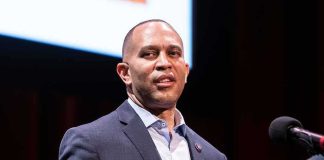
Rebellion PAC sent a pro-El-Sayed ad that blamed high grocery prices on support for Israel. The ad drew fast blowback and claims it used antisemitic tropes. The Abdul for Senate campaign said the ad was not theirs, not approved, and not part of their message. Spokesperson Roxie Richner told the Jewish Telegraphic Agency that “No one speaks for Abdul but himself and his campaign” and said his focus is on fighting Trump policies that raise prices for Michigan families.
Democratic Representative Haley Stevens blasted the ad as fearmongering and bad politics, saying it hurts Democrats in Michigan. Critics called the grocery-price framing antisemitic. The pile-on spread fast, because the charge is simple and sticky. Even a clean disavowal can lag behind a punchy video that people already watched on their phones.
Why The Disavowal Does Not End The Story
Outside groups can legally spend to help a candidate as long as they do not coordinate. That shield lets a campaign claim distance while still getting the boost. Voters often struggle to tell the difference, and many do not care. To them, if it helps you, it is about you. The result is a split screen: legal separation on paper, political fusion in practice, especially when the message hits a live wire like Israel.
The disavowal also avoids the ad’s substance. The campaign did not say whether it agrees or disagrees with tying prices to Israel. That gap invites opponents to connect dots themselves. The dots are available because El-Sayed has used hard lines on Israel in recent weeks, calling Israel not a friend, accusing it of using the United States as a shield, and painting United States cover for Israel as aiding wrongdoing. Those quotes give critics raw material.
The Candidate’s Own Words And The Voter Impact
El-Sayed has criticized Israel’s conduct in Gaza and rejected unconditional support. Reports noted he has called events “genocide” and questioned Israel’s status as an ally. He also declined to say Israel has a right to exist in some coverage, which added fuel. These points, taken together, define him in voters’ minds more than one ad ever could. They also explain why rabbis and Jewish leaders pressed him to clarify lines and terms.
Conservatives see a basic test in foreign policy: friends stand by friends, and aid should reward reliable allies. Many on the right judge El-Sayed’s framing as reckless on that test. They also see economic blame-shifting onto Israel as a dodge from real drivers like energy policy, federal debt, and regulation. The strongest case against the ad’s logic is simple: grocery inflation started long before this news cycle and has many homegrown causes, not a single foreign villain.
The Money War Shaping The Narrative
Outside actors on both sides are spending to define El-Sayed. United Democracy Project, which is affiliated with the American Israel Public Affairs Committee, funded mailers to Michigan Jewish voters that revived past controversies about El-Sayed’s response to an attack on a synagogue. That targeting shows how a few sharp lines in a speech can become the script for weeks of mail, texts, and video.
Abdul El-Sayed's Treasurer Behind Super PAC Pushing Third-Party Libertarian as 'True Conservative' in Michigan Senate Race | Chuck Ross, Washington Free Beacon
Abdul El-Sayed's campaign treasurer is also the treasurer of a shadowy super PAC spending hundreds of thousands of… pic.twitter.com/znUKNN5J6O
— Owen Gregorian (@OwenGregorian) October 23, 2026
Coverage described Rebellion PAC’s recent outlays to help El-Sayed with texting and digital ads. Even with the campaign’s non-affiliation claim, those buys create an echo that opponents can use. News outlets across the spectrum reported the separation, but that nuance often loses to emotion when a message touches faith, identity, and war. The political cost lands on the candidate who benefits, not on the outside group that wrote the script.
What Would Clear The Air For Voters
The fastest fix is sunlight. The campaign could release its complete text-message creative and vendor records to show what it did and did not send. It could publish a plain-language Israel policy that draws bright lines between criticism of a government and denial of a nation’s right to exist. It could answer the ad’s claims one by one, on the record. That work serves voters who want both moral clarity and economic honesty.
Bottom Line For Michigan
Campaigns do not control every message in a Super Political Action Committee era. But candidates own their words. El-Sayed’s critics have an easy job because his own quotes supply them material. His campaign’s disavowal is correct on the facts of authorship, and still not enough on the politics of responsibility. Michigan voters will judge less on who paid for which text, and more on whether a would-be senator blames an ally for their grocery bill. That answer matters.
Sources:
twitchy.com, jta.org, jewishinsider.com, bridgemi.com, thehill.com, theatlantic.com, sunherald.com