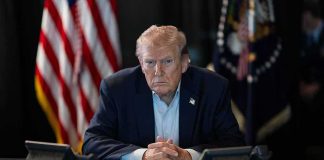

Trump just told Senate Republicans that if they bury the SAVE America Act, they may be burying their party with it.
Story Snapshot
- Trump warned he will not endorse any Republican who votes against the SAVE America Act.
- The bill requires proof of citizenship to register and photo identification to vote in federal elections.
- The Senate opened debate with a 51-48 vote, but support remains short of the finish line.
- Senate leaders say the votes are not there to break a filibuster or change rules.
What The Bill Actually Does, Not What People Say It Does
Congressional text states the core rule in plain terms: show documentary proof of United States citizenship to register, and show photo identification to vote in federal elections. Lawful voters already do this in daily life for work, banking, and air travel. The bill would standardize those checks across states for federal races. The formal description on Congress.gov leaves no doubt about scope and intent: citizenship proof at registration, photo identification at the polls.
Backers pitch this as common sense. They argue that trust in elections sinks when rules vary by state and verification is loose. They say the bill closes gaps and deters cheating without blocking honest voters. That claim matches the bill’s narrow design for federal elections. It does not rewrite every state rule. It sets a floor: prove citizenship to join the voter rolls, present photo identification to cast a ballot.
Why The Senate Fight Turned Nuclear
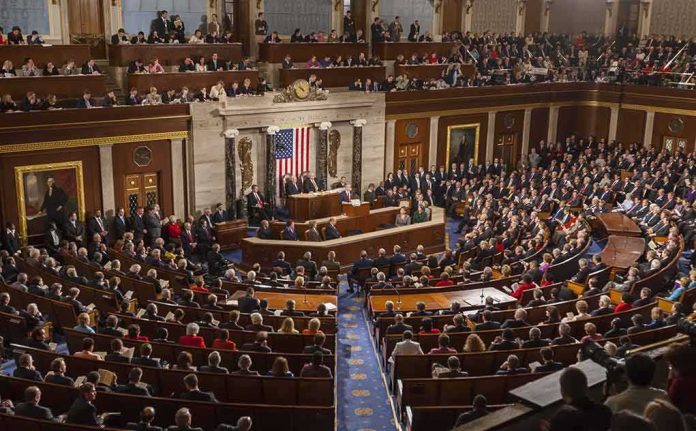
The bill cleared a first hurdle with a 51-48 vote to begin debate, which shows real support but not a path to final passage under current rules. Senate Majority Leader John Thune has said his conference does not have the votes to remove the legislative filibuster and push the measure through. He put it bluntly: the votes are not there. That math hardens the choice for Republicans. They can either win enough Democrats or change the rules. So far, they have done neither.
Trump has raised the stakes. He warned he will withhold endorsements from any lawmaker who opposes the bill. He framed the test as bigger than one vote, saying the party’s future rides on delivering clean, verifiable elections. The signal to Senate Republicans was simple: pass it, or lose the base and lose his backing. That message landed as the chamber prepared further action on the bill.
The Murkowski Split: Agree On Goals, Oppose The Text
Senator Lisa Murkowski has said she supports the goals—only citizens vote, and identification at the polls—but rejects the current text. She argues the bill would land hard in Alaska, where many voters live far from state offices and lack easy access to documents. She also raised alarms about how tribal identification cards would count in registration and what travel burdens rural voters would face under new paperwork rules.
Her stance opened a rift inside the party. Supporters say her concerns are fixable with longer timelines, mobile registration, and clear acceptance of commonly held documents. They argue that when a bill secures the core principle—citizens only, identification at the polls—leaders should solve logistics, not block the standard. On the facts, her critique targets implementation risk, not the central premise that citizenship and identification checks should be uniform.
Does The Bill Fix A Big Problem Or Prevent One?
Skeptics argue documented cases of noncitizen voting are rare. They warn that strict proof-of-citizenship rules can delay or block eligible voters who do not keep passports or certified birth records on hand. They point to states where large numbers of registrations stalled when similar rules took effect, and they worry about cost and time to replace old documents. These are real questions about scale and paperwork, not values.
Meet Dottie.
She helped to deliver Pennsylvania for President Trump & wants Senate Majority Leader Thune
to pass the SAVE America Act.
Dottie, thank you for helping to secure our nation’s future. pic.twitter.com/gv4AtMG5T7
— John f Kennedy jr ⏰ (@JohnJohnjr37795) September 1, 2026
Conservatives reply that election rules should be simple, uniform, and verifiable. They say preventing even small amounts of ineligible voting protects confidence in close races. They also note that the bill concerns federal elections and could be paired with free identification, document fee waivers, and robust outreach. That approach fits the American conservative goal: set clear standards, reduce loopholes, and design practical paths so every eligible voter can meet them without hardship.
The Clock, The Threshold, And The Cost Of Failure
The Senate’s sixty-vote threshold remains the wall. Without it, a simple majority could pass the bill this session. With it, supporters need at least some Democrats to join or a rules change that leaders say lacks support. Each day of drift invites more pressure from the base and more tough choices for incumbents. Trump’s warning sharpened those edges. Fail here, and Republicans face a demoralized core and a talking point they will hear in every primary and every swing state race.
Sources:
congress.gov, rules.house.gov, democracydocket.com, theguardian.com, thune.senate.gov