

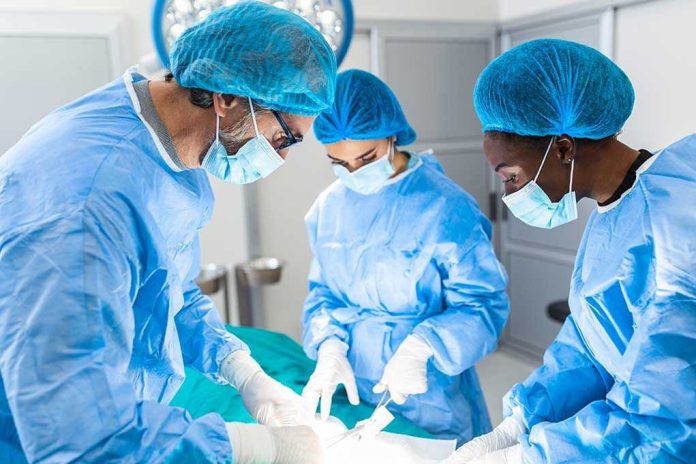
A near-death surgical scare can turn a “real-life Barbie” fantasy into a hard lesson about who controls your body, your money, and your future.
Story Snapshot
- The “turning me into a Barbie” storyline spreads easily online because it mixes romance, control, and high-stakes risk.
- The research available leans heavily on dramatized or entertainment-style content, not medical documentation.
- The most believable part of these stories is not the doll aesthetic; it’s the slippery slope of pressure, normalization, and escalation.
- When surgery enters a relationship power dynamic, consent can get blurred by money, manipulation, and sunk-cost thinking.
The headline sells romance; the pattern reads like control
The premise “my man is turning me into his real-life Barbie” works because it sounds playful until you track the mechanics: one partner sets a target look, funds or influences procedures, and frames compliance as love. The moment a medical complication enters the story, the tone flips from makeover to mortality. American common sense says adults can choose surgery, but it also says coercion dressed up as affection still counts as coercion.
Limited data available; key insights summarized from the user’s research set, which contains mostly entertainment content and one tabloid-style article rather than verified medical or legal records. That limitation matters because “nearly died” can mean anything from a dramatic retelling to a documented emergency. Still, the cultural phenomenon is real: extreme beauty projects thrive online, and relationship dynamics can push people from “one tweak” to repeated operations with little pause for sober risk math.
Why the “Barbie build” keeps escalating once the first surgery happens
Cosmetic surgery is rarely a one-and-done decision in these narratives; it becomes a series. Each procedure makes the next feel more normal, especially when social media applause, a partner’s approval, or a paycheck depends on the persona. That’s the escalation trap: after spending money, time, and pain, backing out feels like failure. Conservative values emphasize personal responsibility, but responsibility requires clear-eyed choices, not choices made under ongoing emotional leverage.
Medical risk also stacks. Even when individual procedures carry low complication rates, repeated anesthesia, multiple surgeries, and travel for bargain pricing can increase danger. “Nearly died” often shows up after a threshold gets crossed: an aggressive combination surgery, a revision on top of a revision, or a rushed timeline. People forget that a cosmetic operating room is still an operating room, and bodies don’t negotiate with branding goals or boyfriend fantasies.
The power dynamic: who pays, who pushes, and who lives with the consequences
Money changes the consent conversation. When a partner funds procedures, the recipient can feel indebted, managed, or quietly purchased. When the partner also curates clothes, hair, and behavior, the “doll” theme stops being aesthetic and starts looking like identity capture. No accusation is needed to see the risk: the incentives point one way. If your livelihood, housing, or relationship stability depends on staying “on brand,” saying no becomes expensive.
Common-sense safeguards look boring, which is why people skip them: slow down, separate relationship pressure from medical decisions, and insist on independent consultations. A strong relationship can survive a boundary. A weak one demands proof through sacrifice. The most telling detail in any “human Barbie” story is not the before-and-after photo; it’s whether the person retains the freedom to stop without punishment, ridicule, or abandonment.
The near-death moment exposes what fantasy hides
A medical emergency cuts through the performance. The recovery bed is where slogans like “do it for us” or “you’ll be perfect” meet real consequences: infection risk, breathing trouble, blood loss, clots, surgical errors, or complications from anesthesia. If a partner responds with anger about delays, scars, or canceled procedures, that reaction clarifies the relationship’s core. Love protects life; obsession protects the look.
Stories in this genre often include a pivot: the person either doubles down to “finish the transformation” or wakes up to the fact that the project was never truly theirs. That fork matters for readers because it’s the same decision point in smaller, everyday versions: the pressure to stay young at any cost, the fear of losing a spouse’s attention, the belief that a body must be “upgraded” to earn security. Those are cultural lies with real bills attached.
Practical takeaways for readers who don’t want their loved ones to become a cautionary tale
If someone you care about is chasing an extreme aesthetic, focus less on shaming and more on slowing the clock. Ask who chose the goal, who benefits financially or socially, and what happens if they stop today. Encourage a second opinion with a board-certified surgeon, transparent complication discussions, and a realistic recovery plan. Adults have the right to modify their bodies, but nobody should feel they must gamble with their life to keep a partner.
The most responsible conclusion, based on the user’s research limits, is that this specific “nearly died in surgery” claim cannot be verified here with medical records or credible reporting. That uncertainty doesn’t make the warning irrelevant; it makes it more urgent to treat sensational stories as prompts for prudence, not templates for imitation. The real moral is simple: a relationship that requires surgical risk to maintain affection is not love; it’s a contract written on skin.
Sources:
My Boyfriend Thinks I’m A Barbie Doll
My Husband’s Crazy About Barbie