

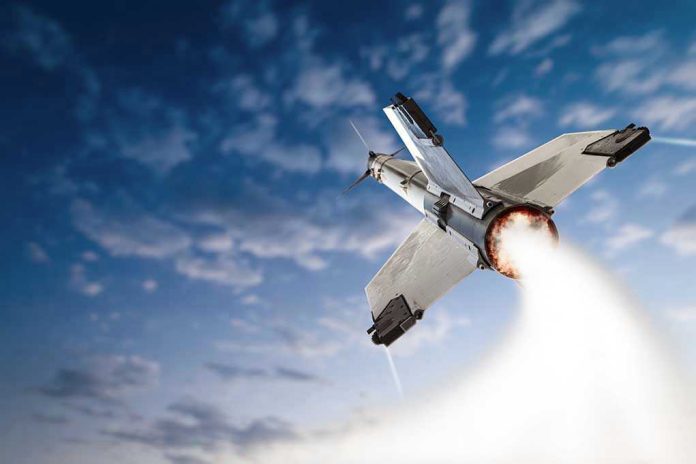
A new military strategy promises to bypass traditional logistics, delivering critical supplies from space, sparking debate about its feasibility and implications.
Quick Take
- The U.S. military is pursuing “rocket cargo” technology to resupply troops globally within 90 minutes.
- This initiative bypasses traditional logistics routes, avoiding overflight permissions and air threats.
- Falling launch costs and reusable rocket technology make the concept more feasible than before.
- The plan could transform military logistics, though it faces significant technical and legal challenges.
Revolutionizing Military Logistics via Space
The U.S. Air Force and Space Force are spearheading an ambitious project to revolutionize military logistics through “rocket cargo” technology. This initiative aims to deliver substantial payloads, equivalent to a C-17 aircraft’s capacity, anywhere on Earth in approximately 90 minutes. This groundbreaking strategy seeks to overcome the limitations of traditional logistics, which often require complex diplomatic negotiations for overflight rights and are vulnerable to surface and air threats.
Falling launch costs and advancements in reusable rockets, supported by commercial partners like SpaceX and Blue Origin, have made this concept more attainable than in previous decades. This technological leap promises not only military advantages but also potential applications in humanitarian missions, enabling rapid response in crisis situations.
Challenges and Considerations
While the potential benefits of rocket cargo are significant, the initiative faces several challenges. Technical hurdles such as launch preparation time, landing accuracy, and cost management remain critical issues. Moreover, the legal landscape concerning space logistics is complex, with international implications regarding the use of space for military purposes. The project’s success depends on overcoming these barriers and proving the viability of mass-cargo deliveries through space.
The U.S. Space Force has requested $20 million in its FY 2025 budget to further develop space access, mobility, and logistics. This funding will support the engineering of point-to-point delivery services and on-orbit refueling, establishing foundational capabilities aimed at operational readiness by 2026.
Implications for the Future
If successful, rocket cargo technology could transform military logistics, offering a fourth pillar alongside sea, air, and land. This development would significantly enhance strategic reach and operational tempo, providing rapid crisis response capabilities, especially in areas with degraded infrastructure or restricted access. However, the initiative also raises questions about the militarization of space and the potential for international tensions.
As the project progresses, the collaboration between the military and commercial sectors is crucial. The success of such dual-use systems blurs the lines between civilian and military operations, potentially complicating international relations and defense strategies. The coming years will be pivotal in determining whether rocket cargo becomes a standard component of military logistics or remains an experimental venture.
Sources:
Space Force looks to ramp up space mobility and logistics research in FY 25
Why (and how) the US military wants to resupply troops from space
Spaceborne Autonomous Resupply: The NASA Model for Prolonged Endurance in Multidomain Operations
REFORPAC 2025: US Air Force Executes Unprecedented Surge into Pacific Theater