

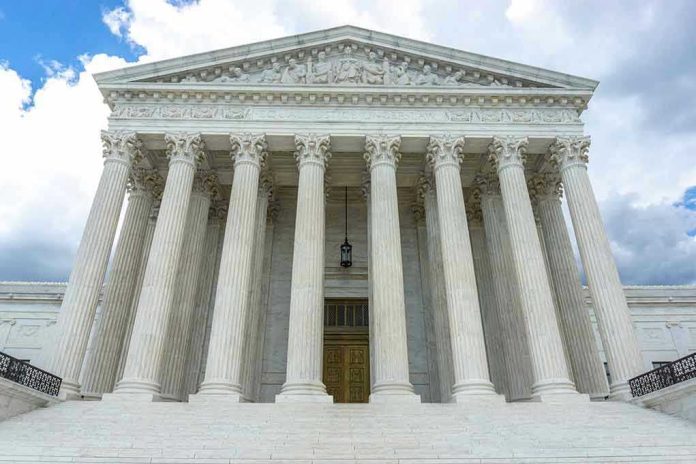
A conservative stalwart on Wisconsin’s Supreme Court has announced she will not seek reelection in 2027, potentially handing liberals an opportunity to expand their already precarious majority and further entrench progressive control over one of America’s most politically consequent state courts.
Story Snapshot
- Chief Justice Annette Ziegler, a conservative elected in 2007, will retire when her term expires in 2027 rather than seek a third decade on Wisconsin’s Supreme Court
- Her departure opens a critical seat that could allow liberals to expand their current 4-3 majority, further isolating conservative voices on issues like gun rights, election integrity, and parental authority
- Wisconsin faces an unprecedented six-year streak of annual Supreme Court races through 2030, with each election determined by millions in outside spending and partisan mobilization
- The announcement follows years of conservative setbacks after Janet Protasiewicz’s 2023 election flipped the court to liberal control, reversing decades of constitutionally-grounded rulings
Ziegler’s Departure Opens Door for Liberal Expansion
Annette Ziegler, who has served Wisconsin’s Supreme Court since 2007 and held the position of Chief Justice from 2021 to 2025, confirmed she will not run for reelection when her term concludes in August 2027. Her retirement represents a significant shift in the court’s composition, as liberals currently hold a narrow 4-3 advantage following Janet Protasiewicz’s election in 2023. Ziegler’s seat provides Democrats and progressive interest groups another opportunity to cement ideological control over a court that decides critical issues from redistricting to abortion policy. The court operates under nonpartisan elections with ten-year terms, yet races have become intensely partisan battlegrounds with national implications.
High-Stakes Election Cycle Threatens Conservative Representation
Wisconsin voters face an extraordinary sequence of Supreme Court elections from 2025 through 2030, covering all but one seat on the seven-member bench. The 2025 race for retiring liberal Justice Ann Walsh Bradley’s seat pits conservative Brad Schimel against liberal Susan Crawford, with the outcome potentially flipping the court back to conservative control temporarily. However, the 2026 race for Justice Rebecca Bradley’s seat and now Ziegler’s 2027 opening create successive opportunities for liberals to build a commanding majority. These elections attract record spending, with appeals court races alone exceeding $1.56 million as donors recognize Wisconsin’s judiciary as pivotal to national progressive agendas on gun control, election procedures, and environmental regulation.
Liberal Court Majority Undermines Constitutional Protections
The shift to liberal dominance following Protasiewicz’s 2023 election reversed years of constitutional adherence on individual liberty and limited government. Prior conservative majorities issued rulings like the 2022 Kaul v. Prehn decision, which respected statutory appointments to state boards rather than empowering executive overreach. Democratic Governor Tony Evers has strategically appointed liberals to fill vacancies, creating a judicial pipeline that mirrors his administration’s priorities on issues ranging from pandemic mandates to Second Amendment restrictions. Conservative legal advocates, including the Wisconsin Institute for Law & Liberty, have mobilized donor networks to counter this trend, but face uphill battles against well-funded progressive organizations determined to reshape Wisconsin law.
Former Justice Janine Geske noted that decreased Supreme Court caseloads have elevated the importance of appeals court elections, which serve as ideological gateways to higher court review. Marquette Law School faculty highlighted that the 2025-2030 election streak ensures continued volatility and nationalized attention, with every race potentially altering the balance of power. Ziegler’s 2017 reelection occurred amid low liberal turnout following Trump’s unexpected 2016 victory, demonstrating how national political currents directly impact Wisconsin judicial contests. Her decision not to seek a third term removes a reliably conservative voice who endorsed fellow conservatives and resisted the activist tendencies now dominating court deliberations.
Sources:
Wisconsin Supreme Court – Alliance for Justice
Get ready for 6 years of Supreme Court races – Marquette University Law School Faculty Blog