

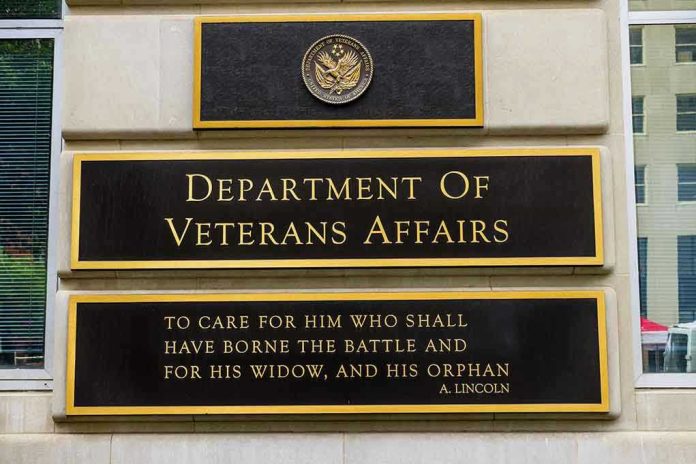
More than 300,000 American Gulf War veterans may be living with war wounds the government will not fully admit happened, because the way Washington labels their service lags decades behind the reality of where they fought and what they breathed.
Story Snapshot
- “Gulf War” status unlocks powerful presumptive benefits, but the rules are technical and often misunderstood.
- The Gulf of Oman is on the Veterans Affairs (VA) Gulf War list, yet many veterans from that theater still struggle to prove their claims.
- VA denial and error rates on Gulf War–related conditions remain stubbornly high, leaving thousands in bureaucratic limbo.
- The real fight now is over legal recognition and presumptions, not whether the Gulf of Oman was dangerous.
How We Got To Hundreds Of Thousands Of Denied Gulf War Claims
When the shooting stopped in 1991, most Americans moved on; the paperwork never did. Nearly 700,000 Americans served in the Persian Gulf War, and the Department of Veterans Affairs later estimated that roughly 44 percent of those veterans suffer from some form of Gulf War Illness, a cluster of chronic, often unexplained symptoms.[1] That math alone suggests more than 300,000 affected veterans, yet Government Accountability Office data show denial rates that would get any private insurer hauled into court.[2] Early on, almost 95 percent of claims for undiagnosed Gulf-related illnesses were rejected, not because the pain was fake, but because the rules demanded proof science could not yet neatly provide.[2]
Even after decades, the pattern did not vanish; it evolved. Between 2010 and 2015, one analysis cited by advocates found Gulf War illness issues were granted at only about a 17 percent approval rate.[1] That is an improvement over 95 percent denial, but still an indictment of a system that claims to “honor their service” while burying them under standards many examiners barely understand.[1] Lawyers who focus on Gulf War cases warn that federal employees and medical examiners frequently misapply the criteria for so-called Gulf War undiagnosed illnesses, leading to waves of mistaken denials that later need to be appealed at great cost in time, energy, and taxpayer dollars.[3]
Why The Gulf Of Oman Matters So Much On Paper
Walk the deck of a ship in the Gulf of Oman in 1991 or 2003, and every veteran there knew they were in the same regional war as those in the better-branded “Persian Gulf.” The VA eventually caught up geographically, if not politically. Its own guidance now explicitly lists Bahrain, the Gulf of Aden, the Gulf of Oman, Iraq, Kuwait, Oman, Qatar, Saudi Arabia, the United Arab Emirates, and the airspace above these locations as qualifying Gulf War service for presumptive purposes. That means service-connected chronic conditions from that theater can be legally presumed related to service without the veteran proving the invisible exposures one by one.[4]
The catch is that the VA does not recognize some distinct “Gulf of Oman war.” It folds that service into the broader Persian Gulf War and Southwest Asia umbrella. From a Washington rulemaker’s perspective, that sounds tidy. From a sailor whose ribbon rack and state paperwork never explicitly say “wartime service,” it feels like a technical dodge. Benefits and certain honors hinge on whether Congress and the VA marked your period as wartime, even if you watched hostile aircraft on radar or dodged mines in the same sea lanes as everyone else.
Presumptive Benefits: The Lever That Changes Everything
Presumptive status is the quiet hinge on which most of this swings. Veterans ordinarily must prove their disability is directly connected to their service. For Gulf War veterans, Congress and the VA carved out exceptions for specific chronic, unexplained conditions that manifest to a compensable degree within a set window, currently through December 31, 2026 for many Gulf-related issues.[5] Under these presumptions, the veteran does not need to show exactly which smoke plume, pesticide, or depleted uranium particle did the damage; the law assumes service in that theater during the qualifying period is enough.[4][5]
Yet even with presumptions, Gulf War veterans remain some of the most frequently denied claimants in the system.[1][3] Attorneys who live in this world point out that confusion inside the VA about what counts as a qualifying chronic multi-symptom illness routinely leads to improper denials.[3][6] From a common-sense, conservative standpoint, that is bureaucracy at its worst: the government already decided, in statute and regulation, to err on the side of those who served, but the implementation lags behind, leaving veterans effectively forced to litigate what Congress already resolved.
Recognition, Labels, And The Conservative Case For Fixing This
Debates over whether to declare the “Gulf of Oman conflict” an official wartime period are not just about pride; they are about which key fits the lock. Similar recognition battles have played out in other countries, where Persian Gulf veterans were given “special duty area” status instead of formal wartime recognition, limiting access to certain benefits until lawmakers reconsidered the definitions. In the United States, the Gulf War “era” for benefit purposes is already extraordinarily broad, effectively running from August 2, 1990 to the present. The problem is not the calendar; it is whether the paper trail for each veteran clearly lines up with those categories.
From the vantage point of American conservative values, the solution is not a new layer of vague promises. It is precise law and accountable administration. If the VA already lists the Gulf of Oman as part of the Gulf War theater, then veterans who served there during the qualifying era should see that reality reflected automatically in their records and adjudications. Congress and the agency have a duty to clean up their own categories, standardize how theaters like the Gulf of Oman are coded on discharge and claim documents, and enforce presumptive rules that already exist. That approach respects fiscal responsibility by using clear standards instead of endless litigation, and it honors the basic bargain: if you stood the watch in harm’s way, the country will not hide behind technicalities when the bill for that service finally comes due.
Sources:
[1] Web – 300,000 Veterans Still Can’t Access Some Benefits Because Their War …
[2] Web – Why VA Claims Are Often Denied for Gulf War Syndrome
[3] Web – Evidence Considered in Persian Gulf War Undiagnosed Illness Claims
[4] Web – Getting Veterans (VA) Disability for “Gulf War Syndrome” | CCK Law
[5] Web – Disability Benefits for Gulf War Veterans | Rob Levine Law
[6] Web – Gulf War Syndrome VA Benefits: 2026 Guide To Evidence …