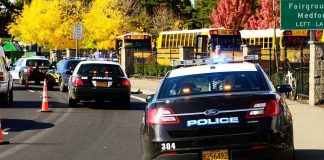


A state trooper is dead, a trucker is charged, and the policy trail behind it raises hard questions.
Story Snapshot
- Prosecutors charged 33-year-old Michael Bon after a crash that killed Trooper Michael Pahira Jr.
- Investigators have not determined why the truck left the roadway.
- Congressional testimony says the administration paroled about 2.8 million inadmissible aliens in three years.
- Claims about Bon’s specific parole history and license status remain unverified in primary records.
The fatal I-81 crash and what we know for sure
Pennsylvania State Police say Trooper Michael Pahira Jr., 44, died after a tractor-trailer veered off Interstate 81 in Schuylkill County and struck him during a roadside inspection. Prosecutors charged the driver, 33-year-old Michael Bon of Massachusetts, with homicide by vehicle and other felonies. The reason the truck left the roadway remains undetermined in the case filings reported to date. Officials have not tied the cause to intoxication, fatigue, or a mechanical issue at this time.
TRUCK DRIVER CHARGED IN DEATH OF PENNSYLVANIA STATE TROOPER
A truck driver has been charged in connection with the death of Pennsylvania State Trooper Michael Pahira following a fatal crash on Interstate 81. Authorities say the suspect was in the United States unlawfully,… pic.twitter.com/uzdMDt8y7J
— Washington Eye (@washington_EY) July 6, 2026
Several social media posts and a Facebook page claim Bon is a Haitian national who lost humanitarian parole in 2025 and still obtained or held a Commercial Driver’s License from Massachusetts. Those claims lack backing from public Department of Homeland Security or court records in the current docket. They may prove true, false, or partly right. Until primary documents surface, treat those details as allegations, not settled fact. The crash cause itself remains unanswered in official summaries.
How parole works and where CHNV fits
Humanitarian parole is a tool in immigration law. It lets officials allow someone to enter for urgent reasons or a clear public benefit. The law says it should be decided case by case. The current administration expanded use through a process for people from Cuba, Haiti, Nicaragua, and Venezuela, known as the CHNV process. Critics in Congress argue that scale turns a narrow safety valve into a broad pipeline without a vote in Congress. That is the core policy fight.
Congressional testimony states the administration paroled about 2.8 million inadmissible aliens during fiscal years 2022 through 2024. Critics say that number shows a program used far beyond past scope and invites gaps in vetting and follow-up. Supporters counter that parole is legal under the Immigration and Nationality Act and can be revoked, which shows the system can tighten when needed. The Supreme Court also affirmed the power to end parole en masse when policy changes.
The unverified links in this case
Key claims about Bon’s path into the country and his legal status in 2025 come from a Facebook post. It labels him a Haitian who entered under a Biden-era pathway and says his parole was later terminated. It also asserts that Massachusetts issued him a Commercial Driver’s License despite unlawful presence. None of those points appears in released federal case files, state motor vehicle records, or the crash docket available so far. These remain open questions, not evidence.
What deserves attention is the paper trail regulators should have if those claims are accurate. A Department of Homeland Security file would show parole approval, entry, any extensions, and any termination. A Massachusetts Registry of Motor Vehicles file would show the documents used to issue any license, and what status checks the state performed. Those records would confirm or kill the narrative. Until then, blame aimed at one policy lever is more heat than light.
Accountability that matches the facts
Trooper Pahira’s family deserves more than political talking points. Start with the crash. Police and prosecutors must nail down why the truck left the road. If fatigue, training gaps, or employer negligence played a role, regulators should act and prosecutors should charge. If a fraudulently obtained license is involved, that is a separate crime. Law-and-order values demand we fix the exact failures proven by evidence, not the ones that fit a headline.
On immigration, Congress should clarify parole boundaries. Case-by-case should mean what it says. If an administration wants a large ongoing admissions channel, it should seek a statute, not stretch a valve into a pipeline. That aligns with common sense and the constitutional order. At the same time, do not smuggle unverified facts into the public square. Tie reforms to hard records, not viral posts. That is how you build policy that saves lives on real highways, not on timelines.
Sources:
americanprogress.org, youtube.com, cis.org, americanimmigrationcouncil.org