

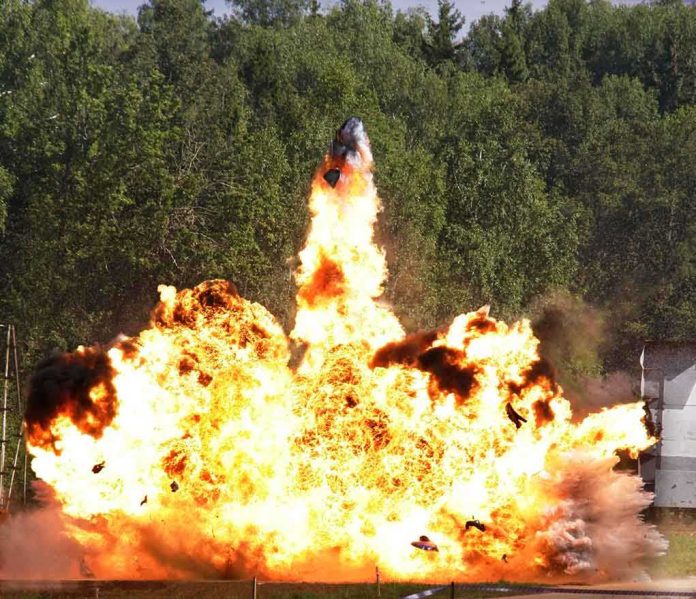
Ukrainian drones struck a critical Russian oil terminal handling one-fifth of Moscow’s seaborne crude exports, igniting a fire that threatens to compound billion-dollar losses already hammering the Kremlin’s war chest.
Story Snapshot
- Sheskharis terminal near Novorossiysk, processing 1 million barrels daily, hit by overnight drone attack on April 6, 2026
- Strike follows March attacks on Baltic ports that slashed Russian oil exports 43% and cost approximately $1 billion weekly
- Attack targets facility handling 20% of Russia’s seaborne oil exports, critical for evading Western sanctions
- Governor confirms drone strikes and residential damage but avoids acknowledging direct terminal hit
Strike Targets Russia’s Black Sea Export Lifeline
Ukrainian drones attacked the Sheskharis oil terminal in Russia’s Krasnodar region during the early morning hours of April 6, 2026, sparking a fire at southern Russia’s largest oil loading facility. The terminal, operated by state-controlled Transneft, processes between 3.5 and 4.5 million tons of crude oil monthly and serves as a crucial endpoint in Russia’s oil pipeline system. Satellite data and social media videos captured the blaze, though footage remains independently unverified. Krasnodar Governor Veniamin Kondratyev acknowledged drone attacks on Novorossiysk, citing damage to residential buildings and drone debris at industrial sites, but conspicuously avoided confirming the terminal strike.
Escalating Campaign Drains Moscow’s Revenue Stream
The Sheskharis attack extends Ukraine’s intensifying assault on Russian energy infrastructure, which has delivered devastating financial blows to the Kremlin. Late March strikes on Baltic Sea ports including Ust-Luga and Primorsk caused Russian oil exports to plummet 43% to 2.318 million barrels per day during the week of March 22-29, generating losses estimated at $1 billion. Previous attacks included a November 2025 drone strike damaging a Chernomortransneft oil depot at Novorossiysk and a March 2 fire at Sheskharis. Ukraine has specifically targeted facilities it claims supply fuel to Russian forces invading Ukrainian territory, aiming to degrade both military logistics and export revenues funding Moscow’s war effort.
Sanctions Evasion Routes Under Fire
Sheskharis represents a strategic chokepoint in Russia’s efforts to circumvent Western sanctions, handling roughly 20% of the nation’s seaborne oil exports. The terminal loads crude oil, fuel oil, and diesel for international markets, providing Moscow with critical revenue amid economic isolation. The sustained Ukrainian drone campaign exploits Russia’s vulnerability as global oil prices surge due to the U.S.-Israeli-Iran conflict, paradoxically threatening to erase the Kremlin’s windfall from higher prices. Prior strikes dropped Ust-Luga’s naphtha production by 70%, affecting 8% of global supply. The pattern reveals Ukraine’s asymmetric warfare capability, with drones reaching targets over 1,000 kilometers from launch points despite Russian air defenses.
Global Markets Face Supply Disruption Risks
The repeated strikes on Russian export infrastructure carry implications beyond the battlefield, introducing volatility into global energy markets already strained by Middle Eastern conflicts. The 43% export drop following Baltic port attacks demonstrated how Ukraine’s tactical strikes can create significant supply shocks. With Sheskharis processing approximately 1 million barrels daily, its disruption compounds pressures on crude and refined product availability. Russian energy firms face mounting revenue losses while Novorossiysk residents contend with fire risks in populated port areas. The attacks boost Ukraine’s leverage in potential negotiations while straining Russia’s budget and military funding, raising questions about Moscow’s ability to sustain prolonged conflict amid eroding export reliability.
Moscow’s evasive public statements—confirming attacks while avoiding acknowledgment of strategic facility damage—underscore the Kremlin’s dilemma as Ukraine demonstrates reach and precision against critical infrastructure. Whether Russian air defenses can adapt to protect dispersed energy assets remains uncertain, but the billion-dollar precedents suggest Ukraine has found an effective pressure point that resonates far beyond military calculus, hitting the pocketbooks funding Putin’s war machine.
Sources:
Ukrainian Drone Attack Triggers Fire at Key Russian Black Sea Oil Terminal – Reports
Kyiv Post Coverage of Oil Hub Strikes
Ukraine Hits Russian Oil Terminal as Moscow’s Drone Strikes Intensify