

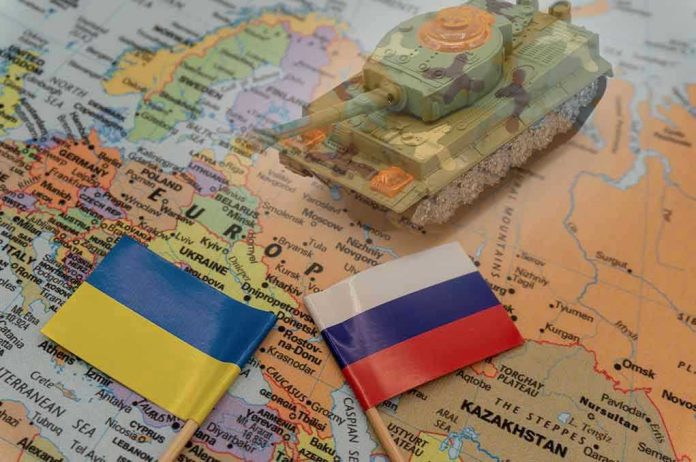
Diplomats gather at conference tables in Abu Dhabi while Ukrainian mothers huddle in darkness, powerless to heat their homes—this is the stark reality of peace negotiations conducted as war grinds on.
Story Snapshot
- Trilateral peace talks between the United States, Russia, and Ukraine resume in Abu Dhabi on February 1, with officials claiming the framework is 90 percent complete despite fundamental disagreements remaining over territory and security guarantees.
- Russian forces continue bombing Ukrainian power infrastructure during winter months, leaving millions of civilians without electricity as ground fighting persists along the 1,000-kilometer front line.
- The Trump administration threatens additional sanctions on Moscow while mediating negotiations, with Ukrainian President Zelenskyy stating US security guarantee documents are ready but awaiting formal signature.
- Kremlin spokesman warns against expecting quick results while experts suggest Putin employs stalling tactics to maintain battlefield leverage despite apparent diplomatic engagement.
Diplomatic Theater Meets Winter Suffering
The second round of US-mediated peace talks begins February 1 in Abu Dhabi, following initial consultations held January 23-24. Kremlin spokesman Dmitry Peskov confirmed the timing on January 26, cautioning that territorial matters hold fundamental significance for Russia and warning observers not to expect immediate breakthroughs. The Trump administration characterized the first round as constructive, yet this diplomatic optimism contrasts sharply with conditions on the ground where combat continues unabated and Russian missiles systematically target Ukrainian power stations during the coldest months.
The Numbers Behind the Negotiations
European, American, and Ukrainian officials claim the peace agreement stands approximately 90 percent complete. That final 10 percent contains the most intractable issues: which territories Russia keeps and what security guarantees protect Ukraine afterward. Zelenskyy announced that documents outlining US security commitments are completely prepared, requiring only formal signatures. The peace framework evolved from an initial 28-point proposal to a more streamlined 20-point structure, suggesting substantive progress occurred during months of diplomatic groundwork conducted in Florida, Paris, and other locations before the Abu Dhabi sessions began.
Putin’s Strategic Ambiguity
The Institute for the Study of War notes the Kremlin exploits the lack of publicly available agreement texts to present negotiations favorably to Russian audiences. The Jamestown Foundation goes further, asserting Putin employs deliberate stalling tactics despite the near-complete framework, fabricating justifications including alleged Ukrainian drone attacks on his residence to avoid direct confrontation with Trump while maintaining hardline positions. Russia’s military advantage on the ground provides negotiating leverage, allowing Putin to wait while Ukrainian infrastructure crumbles and civilian suffering intensifies. This tactical patience tests whether Western resolve to support Ukraine outlasts Moscow’s willingness to absorb sanctions and international isolation.
Ground Truth Along the Front Lines
While negotiators discuss ceasefires and territorial arrangements in climate-controlled conference rooms, soldiers die in trenches along a thousand-kilometer front that has barely shifted in months. Russia’s full-scale invasion, now approaching its fourth year since February 2022, transformed into a grinding war of attrition that preceded by eight years the 2014 annexation of Crimea and support for eastern separatists. The Trump administration set deadlines for agreement and threatened additional sanctions, demonstrating commitment to achieving settlement while maintaining pressure. Yet battlefield realities suggest neither side faces immediate pressure to accept unfavorable terms, creating conditions where diplomatic progress remains hostage to military stalemate.
Ukrainian civilians bear the heaviest burden of this negotiating stalemate. Russian bombardment systematically targets rear-area cities and power generation facilities, leaving millions without electricity during winter. The humanitarian toll underscores the urgency of settlement, yet this same suffering serves Russian strategic purposes—weakening Ukrainian morale and pressuring Zelenskyy to accept territorial concessions. The Trump administration’s active mediation represents the first sustained US diplomatic engagement under current leadership, building on the so-called Anchorage Formula that addresses territorial issues as fundamental negotiating components. Ukraine reportedly made significant concessions already, including legislative changes permitting elections during martial law, demonstrating Kyiv’s willingness to compromise for achievable peace.
What the Final Ten Percent Means
The remaining disputed issues carry profound implications extending far beyond Ukraine’s borders. Territorial settlements will establish precedents for resolving great-power conflicts and may reshape European security architecture for decades. NATO’s eastern flank, European energy markets, reconstruction financing totaling hundreds of billions, and refugee flows affecting millions all hinge on terms negotiated in Abu Dhabi. Postwar security guarantees must satisfy Ukraine’s need for protection against future Russian aggression while avoiding commitments that could drag the United States into direct confrontation with Moscow. These competing imperatives explain why the final 10 percent proves most difficult—easy issues got resolved first, leaving only questions where core interests directly conflict.
Sources:
Kremlin says next round of Russia-Ukraine peace talks set for next week in Abu Dhabi
Russian Offensive Campaign Assessment, January 23, 2026
Talks between US, Ukraine in Abu Dhabi ‘constructive’ but major challenges remain
Putin Stalling on Ninety Percent Complete Peace Deal