

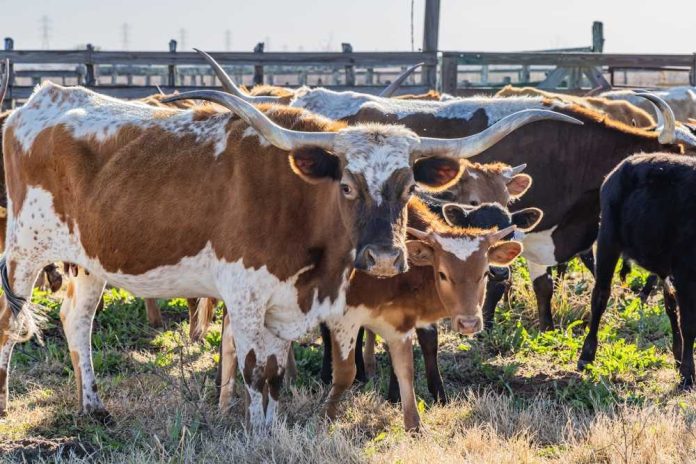
A tiny flesh-eating maggot most people have never heard of now threatens to rip a hole in Texas cattle country and expose how fragile our food security really is.
Story Snapshot
- Six confirmed New World screwworm cases have triggered quarantines across multiple Texas counties and a disaster declaration.
- The parasite is riding a long northward spread from Mexico, where tens of thousands of livestock cases have already hit ranchers hard.
- America’s main weapon is a massive “sterile fly” program—but the new flagship facility will take years to fully come online.
- Politicians want to blame each other; ranchers just want someone to protect their herds and the beef supply.
A flesh-eating fly returns to Texas after decades on the run
Federal officials confirmed that the New World screwworm is back in Texas livestock, with six domestic cases so far and a quarantine zone covering multiple counties in the south and Hill Country regions. Ranchers are now watching cattle, goats, and even pets for wounds that can turn deadly if this parasite takes hold. The Centers for Disease Control and Prevention notes the first U.S. animal case in this outbreak was a calf in Zavala County confirmed on June 3, 2026, ending a long stretch of freedom from this pest in American herds.
Texas media report that these cases appeared in less than a week and include cattle and at least one small ruminant, which shows the bug is not picky about hosts and can move fast once it finds open skin. State leaders responded with a disaster declaration and a 10-county quarantine zone that limits animal movement and forces closer inspection before transport. That kind of control hits ranchers in time and money but is meant to stop a replay of the 1970s outbreak that cost hundreds of millions of dollars in Texas alone.
What the screwworm does to animals and why it scares ranchers
The screwworm is not a metaphor; it is a fly whose larvae literally eat living flesh. Texas A&M AgriLife Extension describes how female flies lay eggs in fresh wounds of warm-blooded animals, then larvae burrow into tissue, grow, and expand the wound as they feed. If no one spots it and treats the animal, infections, shock, and death can follow. In a big outbreak, that means mass suffering in pastures and massive losses in calf crops, with ripple effects on beef and dairy prices for everyone.
Unlike common maggots that clean up dead tissue, screwworm larvae want live meat and will keep boring until they hit bone or kill the host. Extension specialists urge ranchers to inspect animals often, isolate any suspect cases, call state or federal animal-health offices, and crucially, not haul those animals to auctions or other properties. That last point matters for anyone who cares about common sense: moving sick or suspect animals around the state is the fastest way to spread a pest that already knows how to hitchhike on every cut, castration wound, or branding scar.
How the parasite pushed north from Mexico toward Texas herds
This outbreak did not appear out of thin air over Texas. Federal summaries tie it to a re-emergence of New World screwworm in Mexico that began in late 2024 and has since exploded across Mexican cattle country. One network report quoting the Department of Agriculture says there are more than twenty-six thousand screwworm cases in cattle in Mexico, plus at least one human death, with the insect now detected only a few hundred miles from the Texas border. That scale turns what looks like a local Texas scare into a regional biosecurity problem stretching through the Americas.
Republican Sen. Roger Marshall blames the screwworm outbreak, a flesh-eating parasite that affects cattle, on former President Joe Biden, who left office nearly 17 months ago. pic.twitter.com/J1mSNCUizE
— Republicans against Trump (@RpsAgainstTrump) June 8, 2026
Scientists and field veterinarians say several forces helped the parasite break out of the zone where it was once locked down. Warmer winters in Central America, heavy movement of people and animals through choke points like the Darien Gap, and snarled supply chains for sterile flies all appear in expert interviews as contributing factors in the breach of the old biological barrier that kept screwworm bottled up far to the south. Ranchers on both sides of the border now complain they warned about this northward creep long before Washington treated it like an emergency.
Sterile flies: the main weapon that is not fully ready
For this insect, bullets and bug spray are not the main defense; sterile insects are. The classic playbook that cleaned screwworm out of the United States decades ago relied on flooding the sky with lab-reared, sterilized male flies, so wild females mated but produced no viable offspring. American officials restarted that strategy as soon as the new outbreak began in Mexico, using existing production in Panama and a facility in Mexico, and then dispersing sterile flies along parts of the Texas border by air to build a buffer zone.
Here is the catch: everyone agrees that the odds of wiping out the parasite depend on how many sterile flies can be produced and dropped each week. A recent policy analysis describes a new nine-figure U.S. sterile-fly plant as the centerpiece of the long-term response, promising to triple current output and reduce dependence on foreign production. But that same report warns the facility will take at least three years to reach full operation, even with an expedited schedule, leaving a gap between what the science says is ideal and what the system can deliver this year and next.
Politics, blame, and what conservative common sense cares about
Washington, pundits, and social media quickly turned this outbreak into a blame game. Some voices try to tie the Texas cases straight to one administration’s border policy, while others point fingers backward at cuts to surveillance and eradication programs in earlier years. Yet the actual records from the Department of Agriculture and the Centers for Disease Control and Prevention do not say a migrant, a specific policy, or a single decision “caused” the Texas infestations; they describe a regional animal-health threat moving north that officials had been tracking for years.
A conservative, common-sense view should ask different questions. Did government agencies see this coming and move fast enough to shore up sterile-fly capacity once Mexico lit up with tens of thousands of cases? Did Congress fund the new facility when it was first proposed, or only after ranchers sounded the alarm on television? Are border inspection teams, tick riders, and detection dogs actually deployed in the numbers needed along the Texas frontier where cattle, wildlife, and pets cross every day? Those questions focus less on scoring points and more on whether the people in charge took their duty to safeguard food, property, and animal welfare seriously.
Sources:
[1] Web – Flesh-Eating Screwworm Outbreak Threatens Texas Cattle Industry as …
[2] Web – Officials confirm 6 cases of New World screwworm in Texas
[3] Web – USDA Confirms New World Screwworm Detections in Texas and …
[4] YouTube – ‘It’s coming.’ What The Screwworm Could Do To Texas | Y’all-itics
[5] Web – USDA confirms fifth New World screwworm case in U.S. – Facebook
[6] Web – New World Screwworm – Texas A&M AgriLife Extension Service
[7] Web – Texas issues disaster declaration as screwworm threat looms – AAHA
[8] Web – Texas Standard for June 9, 2026: Texas officials race to contain …
[9] Web – Three new cases of screwworm confirmed in Texas
[10] Web – USDA Confirms New World Screwworm in Texas
[11] YouTube – Texas ramps up response to New World Screwworm threat as cases …
[12] Web – New World Screwworm Outbreak – CDC
[13] Web – New World screwworm fact sheet
[14] Web – Current Status of New World Screwworm – usda aphis
[15] Web – Screwworm.gov | Unified Government Response To Protect the …