
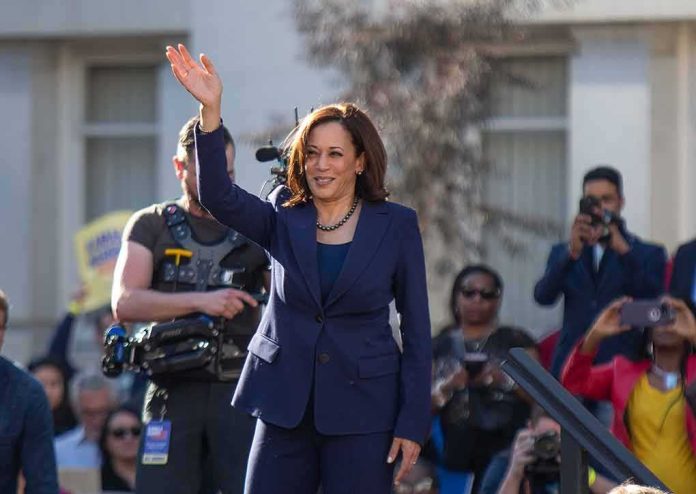
Kamala Harris said she “might” run for president in 2028, and then kept the door open while stopping short of an announcement.
Story Snapshot
- Harris told a New York crowd she is “thinking about it” for 2028.
- She later said she has not decided and shifted focus to 2026 races.
- A podcast interview repeated that no decision has been made yet.
- Reports show interest but no formal campaign launch or filings.
What Harris Said And What She Did Not Say
Harris answered a direct question from Reverend Al Sharpton at the National Action Network convention by saying, “I might. I might. I’m thinking about it,” and added she would keep people posted. She later told a Detroit audience, “I have not decided if I’m going to run again,” before pushing attention to the 2026 midterms. She echoed that on a podcast with Keke Palmer, saying she had not decided yet but would in due time. None of these statements equal a formal campaign launch.
Coverage from national outlets drew a clear line between considering a run and starting one. Reporting noted that neither Harris nor Governor Gavin Newsom had announced, filed paperwork, or built a declared 2028 operation at the time of the remarks. The core facts are simple: Harris did not rule out 2028, and she did not declare for 2028. Those two truths can exist at once without confusion, if we let them.
Why The Language Matters In American Politics
Harris framed her thinking as a question of service and timing. She said she was judging the path “in the context of who and where and how can the best job be done for the American people”. That language fits a classic “testing the waters” stance, where leaders weigh duty, viability, and the calendar before taking the plunge. It is not a pledge. It is a bookmark. Voters should hear the difference, because the difference shapes fundraising, staffing, and debate rules down the road.
Media and crowds often turn “might” into “will.” This is not new. For more than a century, campaign coverage has leaned toward horse-race drama and early speculation, sometimes ahead of facts on paperwork or policy. That tilt rewards teases, travel, and polls. It also pressures figures to answer sooner than they plan. Harris’s remarks live in that tension: open enough to keep options alive, narrow enough to avoid a trigger that starts a legal clock or a full-blown campaign spend.
How 2026 Shapes The 2028 Clock
Harris told supporters that 2028 “won’t matter if we don’t get through 26,” urging Democrats to win key races first. That stance reflects a practical ladder: parties must defend or flip seats to shape issues, committees, and the map. A focus on 2026 also limits the risk of donor fatigue and message drift. Campaign veterans know a two-cycle plan can backfire. Voters hate mixed priorities. Harris’s choice to spotlight 2026 aligns with that lesson and buys her time.
WHO AMERICA NEEDS IN 2028…#BlueWaveIn12Days
Recently, I was invited by the Asan Institute for Policy Studies in Seoul to share my thoughts on America’s leadership in the world and the future of alliances. [Kamala Harris Oct 14]
AMERICAN LEADERSHIP AND THE FUTURE OF… pic.twitter.com/bCxcCb4WrS
— KAY 🇺🇲 🇨🇦 💙 🏳️🌈 🇺🇦 (@chriskay909) October 22, 2026
Travel to states with early 2028 clout grabbed attention, but reports do not tie those stops to a declared 2028 effort. Politicians often visit swing terrain for party building, fundraising, or to test messages without crossing a legal line. The gap between a busy schedule and a formal run is real. No filing, no committee, no launch. The public may chant “run again,” but chants do not equal paperwork or payroll.
What Common Sense Says To Watch Next
Three markers will tell the tale. First, watch for words that shift from “might” to “will,” because that is the bright line voters remember. Second, watch the money: a committee, a hiring spree, or bundled events signal intent faster than any quote. Third, watch the calendar after the 2026 midterms, when party focus loosens and decisions turn final. Until then, Harris has kept one foot on the stage, and the other on the brake.
Sources:
pjmedia.com, krgv.com, ap.org, cnn.com, yahoo.com, newsbreak.com, aljazeera.com, thehill.com, us.headtopics.com, newsweek.com, academic.oup.com, huffpost.com