
A retired New York City police detective now faces a murder charge after a rush-hour shooting on the George Washington Bridge killed a Con Edison worker.
Story Snapshot
- Police charged 62-year-old Victor Romero with murder in the death of 32-year-old Koran Irvine.
- Irvine was found shot in his vehicle on the upper level of the bridge and later died at a hospital.
- Investigators used surveillance video and license-plate readers to identify a person of interest and seize a vehicle.
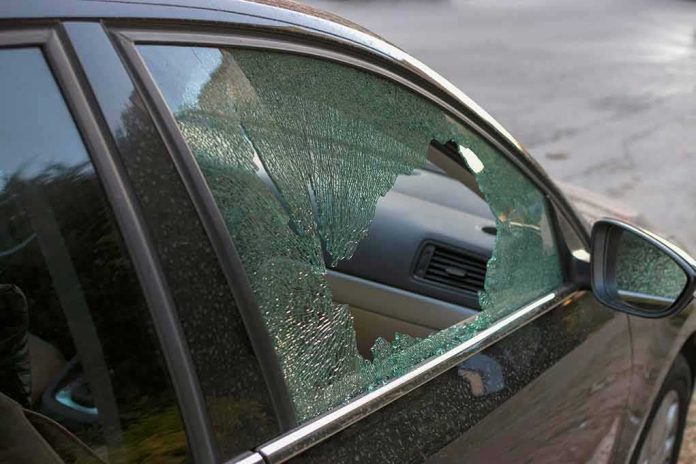
- Reports describe a shattered rear passenger-side window and a wound consistent with a shot from another vehicle.
What Police Say Happened On The Bridge
Police and reporters described an evening commute turned deadly on the upper level of the George Washington Bridge. Officers and Port Authority personnel found driver Koran Irvine wounded and unconscious in his vehicle just after 7 p.m. Crews rushed him to a New Jersey hospital, where he was pronounced dead. The scene showed damage that pointed to gunfire from outside the car, including a shattered rear passenger window. The immediate response shut or restricted lanes and snarled traffic for miles.
Reporters later detailed the injury as a gunshot wound to Irvine’s rear right shoulder, with glass damage that lined up with a projectile entering the cabin. The vehicle sat near the bridge median, which matches a sudden stop after the shot. That physical layout supports the early account that the bullet came from another moving vehicle beside Irvine’s. The focus on where the glass broke and where the bullet entered helps narrow the shooting angle in a fast-moving lane setting.
The Arrest Of A Retired Detective
The New York City Police Department identified 62-year-old Victor Romero, a retired detective, as the suspect and announced a murder charge. Police took Romero into custody and secured his home while seeking a warrant. Law enforcement also impounded a vehicle tied to the case for forensic work. The agency stated the victim was a Con Edison employee, driving home when the conflict spiraled into a fatal shooting. The murder charge places intent and identity squarely before a court.
Local outlets said the investigation pulled from a thick trail of cameras and license-plate readers that scan vehicles entering and crossing the span. That data, paired with traffic footage, helped spot a person of interest and track a car linked to Romero. The reported chain includes surveillance from bridge systems and access points. In a corridor packed with sensors, that makes sense. It also means prosecutors could build a time-stamped map of vehicles and lanes around the shot.
Evidence In Focus: What Supports The Case
Three points anchor the public case so far. First, police say Romero fired the fatal shot and now faces a murder charge. Second, the physical scene supports a bullet entering from outside Irvine’s vehicle, with glass and wound location that fit that path. Third, the medical outcome is clear: responders moved Irvine to a nearby hospital, where doctors pronounced him dead from the shooting injury. Those facts form a direct line from a roadway conflict to a homicide charge.
Retired NYPD detective charged with murder over bridge shooting
A retired New York Police Department detective, Victor Romero, 62, faces a murder charge over the fatal shooting of motorist Koran Irvine, 46, during an apparent road rage incident on the George Washington Bridge on… pic.twitter.com/tMcjKzK8W8
— The CBIJ (@TheCBIJ) October 21, 2026
Investigators also benefit from the bridge’s setting. The upper level at rush hour packs in drivers, patrol units, and surveillance. That raises the odds of finding supporting video or witnesses who saw the approach, the lane shifts, or the chaos right after the shot. License-plate scans can pair with toll data and phone records to fix timing to the minute. Forensic work on the seized vehicle could add gunshot residue traces or glass patterns that show position and speed at the moment of the shot.
What Remains For Prosecutors To Nail Down
Prosecutors will likely seek a clear link between a firearm and the fatal wound path. That means recovering a gun and a projectile that match, or building a strong circumstantial case from video, lane position, and Romero’s movements. They will also need to show why this was murder under the law, not a tragic accident or a lesser offense. That turns on intent, which they may try to prove from driving behavior, any gestures, and the shot’s angle and distance.
Road-rage shootings feel sudden to victims but look methodical in court. Juries expect a timeline, a lane-by-lane map, and a reason the trigger got pulled. A murder charge says the state sees purpose in the act, not panic. That aligns with common sense: armed drivers must show restraint, because a moving gunfight endangers every family stuck in traffic nearby. Public order demands real consequences when a petty clash turns into fatal force on a crowded bridge.
Sources:
foxnews.com, apnews.com, newjersey.news12.com, silive.com, pix11.com