
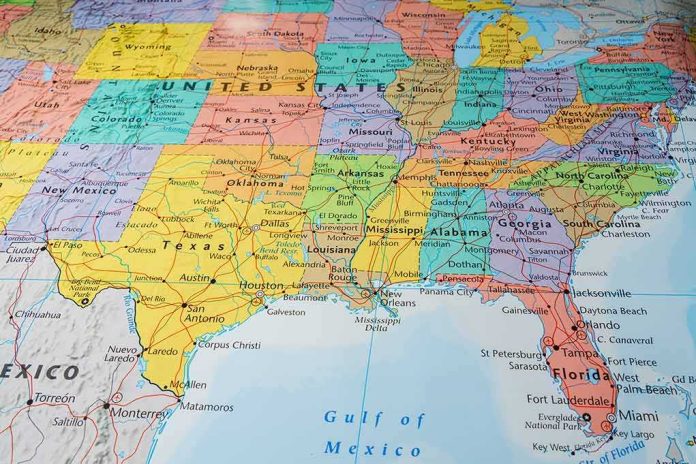
One map, one word swap, and a state of two million people got told its name should change.
Story Snapshot
- President Trump posted a map crossing out “Mexico” in New Mexico and writing “America.”
- A follow-up line praised “New America,” and the White House amplified the image online.
- New Mexico leaders fired back fast, saying the name is not up for debate.
- No formal plan or legal path was announced to actually change the state’s name.
What sparked the firestorm
President Trump shared a map of New Mexico with “Mexico” crossed out and replaced by “America,” hinting at a new name: “New America.” Reports quoted him praising the swap as more “prestigious” and “beautiful.” The White House then reposted the image, turning a platform post into a national headline. Newsrooms framed it as part of a wider push to stamp places with America-forward labels, a theme already used on lakes and gulfs during this term.
Reaction from New Mexico leaders came within hours and was fierce. The governor said the state’s name predates the United States and is not on the table. Lawmakers blasted the idea as an insult to the state’s culture and history. Their message was clear and blunt: the name is New Mexico, period. The short, sharp replies traveled well on social media, where outrage, pride, and jokes mixed fast and loud.
What is fact, what is theater
No executive order appeared, no bill text dropped, and no process began to change a state’s legal name. Coverage noted the White House offered no formal plan. That matters because a president cannot rename a state alone. State names live in constitutions, statutes, and compacts. Changing one would take clear legal steps and consent beyond a single post. A skeptical reader should treat the image as political messaging, not binding policy.
That said, the post was not random. It fits a pattern. The administration has used renaming to send signals, rally supporters, and force a media cycle. Federal names on waters and landmarks have seen attempted changes through executive action, sparking fights with mapmakers and governors. Those moves are easier than a state-name change, which sits outside routine federal naming power. The gap between what looks big and what law allows is the point.
Why New Mexico became the canvas
Trump called New Mexico a “great vote cheating state,” tying the rename to election claims and a promise of prestige. That framing turns a state’s brand into a proxy for trust and identity. It also dares opponents to defend the status quo. New Mexico leaders took that dare. They argued the name holds centuries of meaning, across Hispanic, Indigenous, and frontier histories. They warned that a rebrand would erase culture rather than lift pride. Those are strong home-field values.
Trump posts map renaming New Mexico to 'New America' https://t.co/NePrvW3eOG
— The Detroit News (@detroitnews) September 7, 2026
From a conservative common-sense view, two tests apply. First, does the action respect federalism? A state name belongs first to its people and their laws. Second, does it fix a real problem? A new label cannot heal election disputes or grow jobs. It can only grab attention. On those tests, the post scores as theater, not governance. If the goal is unity and growth, leaders should work with the state on security, energy, water, and border issues that change lives.
What happens next
Expect more symbolic name fights. They are cheap, viral, and polarizing, which makes them useful in modern politics. But legal rails will hold. Presidents can push federal naming rules on maps and agencies. They cannot rename a state without partners and process. New Mexico’s answer was swift and near-unanimous among its Democratic leaders: no. Unless the White House produces real paperwork, hearings, and consent, the map post remains a headline, not a hinge of history.
Sources:
kob.com, aol.com, chosun.com, ladbible.com, wionews.com, centsondollar.com