

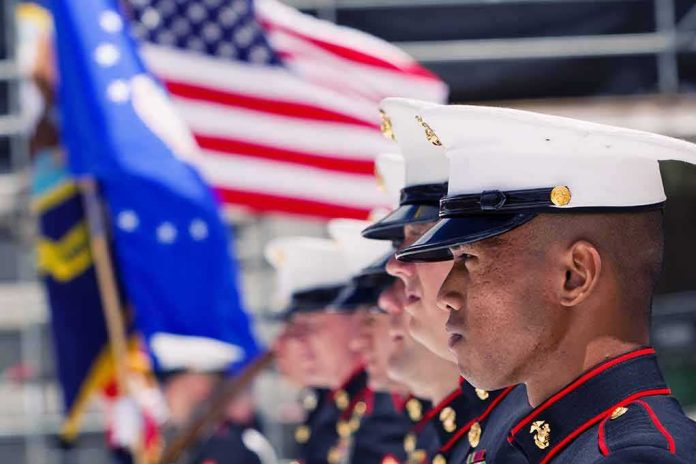
A federal jury just decided that sixteen dead Marines deserve no one held criminally responsible for the engineering decisions that may have sent them plummeting from the sky.
Story Snapshot
- James Michael Fisher, former Air Force propulsion engineer, acquitted on all charges related to 2017 KC-130T crash that killed 16 servicemembers
- Prosecutors alleged Fisher concealed his role in approving inspection changes that skipped critical penetrant testing on propeller blades
- Eight-day Mississippi trial ended with jury rejecting obstruction and false statement charges despite facing 20-year maximum sentence
- Military initially blamed maintenance technicians while key engineering documents remained hidden from investigators
- Acquittal raises questions about accountability when military aviation maintenance protocols fail catastrophically
The Crash That Changed Nothing
On July 10, 2017, a Marine KC-130T refueling aircraft designated Yanky 72 lifted off from Cherry Point, North Carolina, bound for California. Sixteen souls aboard never saw the Pacific. Over Mississippi soybean fields near Itta Bena, a propeller blade disintegrated mid-flight. The resulting catastrophe claimed fifteen Marines and one Navy corpsman. The military grounded C-130 fleets across all services for emergency blade inspections. Families buried their dead. And investigators began asking how a routine maintenance procedure could enable such wholesale destruction.
The Engineer Who Allegedly Knew Too Much
James Michael Fisher worked as lead C-130 propulsion engineer at Warner Robins Air Logistics Complex in Georgia. Federal prosecutors claimed he orchestrated changes to blade inspection protocols starting in 2011 that proved fatal. The alterations involved Blanket Form 202 modifications switching from reliable penetrant dye testing, which reveals surface cracks and corrosion, to eddy current methods. Documents showed a Form 202 signed August 22, 2011, bearing the notation “PER MIKE FISHER.” Engineers discovered in 2012 that eddy current probes proved unreliable, yet Fisher allegedly resumed penetrant testing in 2013 without consulting Level 3 specialists.
A Cover-Up or Prosecutorial Overreach
The Department of Justice indicted Fisher in 2024 after federal agents confronted him in 2021. Prosecutors alleged he denied knowledge of Form 202, blamed subordinates, then sent follow-up emails shifting responsibility away from himself. The charges carried twenty years maximum imprisonment. Defense attorney Steve Farese Sr. painted a different picture: Fisher was in Brazil when key decisions occurred, never approved the waiver, and the blade received proper inspection before Form 202 changes took effect. Farese revealed the investigation originated as a manslaughter probe, suggesting prosecutors stretched for any charge that might stick.
The Military Investigation That Missed the Mark
The initial military JAGMAN investigation concluded maintenance technicians displayed gross negligence. Those frontline workers followed altered technical manuals, unaware that approximately thirty inspection procedure changes had been approved from 2008 through 2017 at Warner Robins. Key documents shielding Fisher and the System Program Office never surfaced during the military probe. Only when DOJ took over criminal aspects did investigators uncover the engineering decisions that preceded the crash. This pattern reflects a troubling dynamic where those wielding authority over technical manuals escaped scrutiny while wrench-turners faced blame for following orders.
The Verdict That Closed the Book
After eight days of trial testimony in Greenville, Mississippi, jurors deliberated and acquitted Fisher on all counts. Defense experts testified the blade could have been missed through ten different pathways, none requiring Fisher’s involvement. The engineer himself expressed relief in post-verdict interviews, stating he cried upon hearing the decision and insisting he never misled investigators. Prosecutors remained silent. The case closed without appeals, leaving families of the deceased without criminal accountability for decisions that may have contributed to their loved ones’ deaths.
The acquittal raises uncomfortable questions about prosecuting maintenance failures in military aviation. Fisher faced the full weight of federal criminal law yet walked free, vindicated by a jury that found reasonable doubt in the government’s narrative. Whether this represents justice for an innocent man scapegoated by overzealous prosecutors, or a system’s failure to hold engineers accountable when their decisions prove catastrophic, depends entirely on which evidence you find most credible. The sixteen dead cannot testify. The families received no closure through criminal conviction. And the military depot system continues operating under inspection protocols that, at minimum, require greater transparency than what preceded Yanky 72’s final flight.
Sources:
Air Force Engineer Charged with Cover-Up in Marine KC-130 Crash – Task & Purpose
Mississippi jury acquits engineer accused of lying about 2017 military plane crash – ABC News