

Three Republican senators just crossed swords with their own party to try to stop Bill Pulte from running America’s spy agencies, and the fight says more about the future of intelligence than about one controversial appointee.
Story Snapshot
- Trump tapped housing-finance chief Bill Pulte, with no public intelligence background, to serve as acting director of national intelligence.
- Democratic leaders blasted the pick as a threat to the independence of the Intelligence Community and tried to block him procedurally.[1]
- At least one senior Republican senator publicly questioned whether Pulte had any qualifications for the job.[3]
- Three Republican senators ultimately joined Democrats on a failed vote to block Pulte from serving as acting director, exposing an unusual rift inside the GOP.[4][3]
How a Housing Regulator Ended Up Over U.S. Spies
President Donald Trump’s decision in June 2026 to name Bill Pulte, the head of the Federal Housing Finance Agency, as acting director of national intelligence stunned Washington because public records showed no meaningful intelligence or national-security background for Pulte.[3][5] The director of national intelligence position was created after the September 11 attacks specifically to coordinate and oversee the entire Intelligence Community, a role lawmakers say requires deep experience in security and intelligence operations.[1] Critics immediately framed the move as placing a loyalist, not a seasoned professional, atop the intelligence structure.[3][5]
Supporters of the appointment emphasized that this was an acting role, not a permanent nomination requiring immediate Senate confirmation, and pointed out that Pulte had already been vetted and confirmed by the Senate once before to run the housing agency.[5][3] From that perspective, the White House operated within the letter of the law that allows presidents considerable flexibility in naming temporary leaders. Defenders argued that presidents of both parties regularly use acting officials to maintain control over the executive branch, and that this case differed only in how loudly opponents complained.[5]
Warner’s Warning About Intelligence Independence
Senator Mark Warner of Virginia, the Democratic vice chairman of the Senate Intelligence Committee, responded aggressively, accusing Trump’s move of threatening “the integrity and independence of the Intelligence Community.”[1] Warner reminded colleagues that Congress created the director of national intelligence after 9/11 expressly to put someone with extensive national-security experience above the Central Intelligence Agency, the National Security Agency, and other intelligence units.[1] In Warner’s telling, placing a housing regulator with no apparent intelligence background in that role betrayed the bargain Congress thought it had struck when it elevated the post.[1]
Warner then did something that moved this from cable-news outrage to structural confrontation: he introduced legislation to prevent agency heads like Pulte from simultaneously serving as acting director of national intelligence.[4] The amendment effectively targeted Pulte by changing the rules of succession to bar the very path Trump had used.[4] That maneuver signaled an institutional concern, not just partisan grumbling, and it dared Republicans to decide whether they cared more about their president’s personnel choices or about the long-term independence of intelligence leadership.[4][1]
Republican Skepticism Breaks Into the Open
The White House might have ridden out Democratic criticism alone, but the appointment ran into open skepticism from at least one powerful Republican on the Senate Intelligence Committee. Senator John Cornyn reportedly said he saw “no evidence of qualifications for that job” when asked about Pulte’s selection, while adding that he was willing to listen.[3] Another television segment quoted Cornyn as saying there was “no evidence Pulte has qualifications for this role,” a line that quickly circulated as shorthand for Republican discomfort with the pick.[2]
BILL PULTE AS ACTING DNI: A MULTI-SOURCE FACT-CHECK AND ANALYSIS
President Donald Trump's June 2, 2026, appointment of Bill Pulte as acting Director of National Intelligence drew immediate, intense coverage from across the ideological spectrum – from The Atlantic and The New…
— 𝗕𝗼𝗯 𝗪𝗲𝗲𝗸𝘀 🇺🇸🗽🇺🇦🙀☕️ 🐾🥬🥡 (@bob_weeks) June 5, 2026
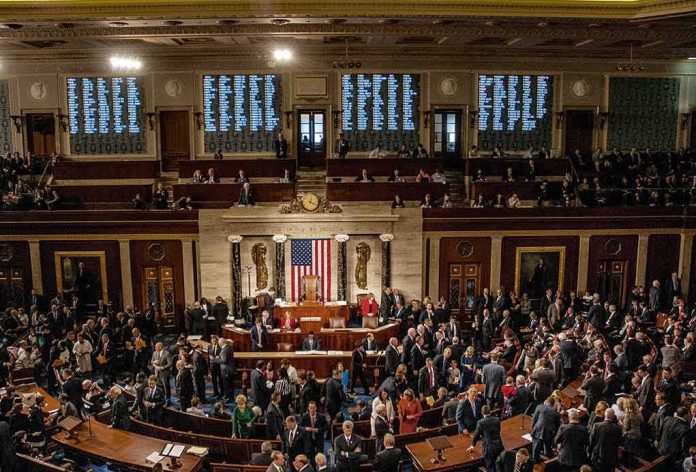
That unease culminated in a floor fight over Warner’s amendment to block agency heads from serving as acting director of national intelligence. Social-media reporting and floor-watchers identified three Republican senators who broke ranks and voted with Democrats in an effort to prevent Pulte from serving as acting director.[4][3] The amendment ultimately failed, so Pulte’s acting appointment technically survived, but the vote put on record that a slice of the Republican conference was willing to limit presidential flexibility rather than rubber-stamp this particular loyalist.[4]
What This Clash Reveals About Power, Not Just Pulte
Supporters and opponents argued past each other about qualifications because the law does not explicitly require prior intelligence experience for an acting director of national intelligence.[3] Warner and his allies leaned on common sense and the original post-9/11 intent of Congress, not on precise statutory language.[1] The White House leaned on the distinction between an acting role and a permanent appointment, asserting legal authority while downplaying the significance of a “temporary” pick.[5][3] That legal gray zone made the battle a political test, not a court case.
Viewed through a conservative, common-sense lens, the fight exposes a real tension. On one side, a strong executive branch matters, and presidents deserve leeway to choose trusted lieutenants who will implement their policies rather than slow-walk them. On the other, concentrating control over intelligence in the hands of political loyalists who lack any visible national-security experience raises serious risks of politicizing surveillance, assessments, and even election-related intelligence. Warner framed the appointment as part of a broader pattern of weakening institutional checks on the Intelligence Community.[1][5]
The record still leaves important questions unanswered. Available materials do not show Pulte’s full résumé, any classified work history, or internal memos explaining why he was chosen beyond personal trust.[3] The reporting that labels him a Trump loyalist rests largely on public behavior and commentary, not on a disclosed selection memo.[3][5] Yet the visible facts are enough to explain why three Republican senators decided to side with Democrats on a high-profile vote: they faced a choice between near-term presidential loyalty and long-term credibility of America’s intelligence leadership, and they signaled that there are still limits to how far some conservatives will go in treating critical security posts as political spoils.
Sources:
[1] Web – JUST IN: Three Republican Senators Vote with Democrats to Block Pulte …
[2] Web – At Senate Intelligence Hearing, Vice Chairman Warner Blasts …
[3] YouTube – Sen. Markey slams Trump tapping Pulte as Acting DNI
[4] Web – Trump names Bill Pulte acting director of national intelligence – …
[5] YouTube – Warner Introduces Bill To Effectively Block Pulte From Serving As …